How to Buy a Quazzar Electric Moped in 2026?

Time:2026-10-01 Author:Henry
0%

Buying a Quazzar Electric Moped in 2026 requires more than comparing colors and advertised speed. The right choice should fit your daily route, charging access, budget, and local road requirements. A short test ride can reveal problems that online specifications hide. Notice the seat height, handlebar reach, brake response, and stability on uneven pavement.

Micromobility consultant Dr. Elena Marlow offers a useful reminder: “A practical electric moped should serve your routine, not impress your neighbors.” Her point deserves attention. A large battery may look attractive, yet it can add weight and increase charging time. A lighter model may feel easier in traffic, but its range could disappoint during colder weather. Small details matter.

This guide explains how to evaluate a Quazzar Electric Moped before placing an order. It covers battery capacity, realistic range, motor performance, braking systems, warranty terms, replacement parts, and after-sales support. You will also need to check whether the selected model meets applicable safety and registration requirements in your area. Those rules can differ widely.

Do not trust every claim.

Ask the seller for written specifications and service details. Confirm the charger’s compatibility with your home electrical setup. Inspect the warranty language carefully, especially exclusions for batteries and water damage. Some buyers focus too heavily on the purchase price. That can be a mistake. A cheaper moped may cost more after weak support, unavailable parts, or frequent battery replacement. The best decision is not always the fastest or cheapest one.
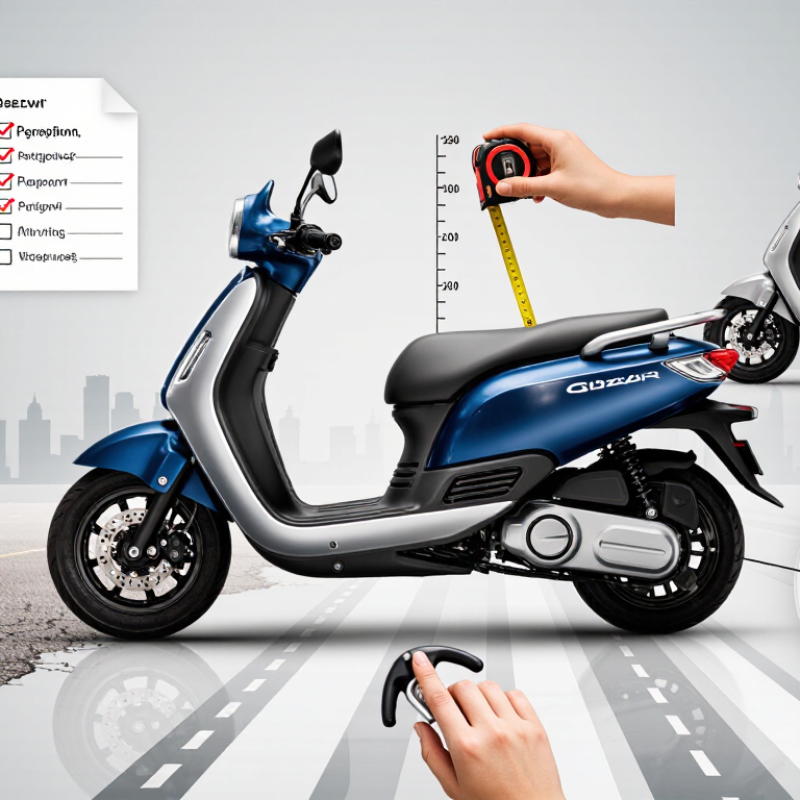
How to Buy a Quazzar Electric Moped in 2026?

Identify the Right Quazzar Electric Moped Model for Your Needs

Choosing the right electric moped model starts with your daily route, not its appearance. Measure your usual distance, hills, road surfaces, and parking conditions. A compact model suits short urban trips and narrow storage spaces. A larger version may feel steadier on rough streets, but it can be harder to lift or maneuver.

Battery capacity deserves careful attention. Manufacturers often quote range under gentle test conditions. Cold weather, heavy loads, hills, and frequent stops can reduce it noticeably. Leave a practical reserve instead of planning around the maximum figure.

A removable battery helps apartment riders, while a fixed pack may offer cleaner integration and better weight balance. Check charging time, battery warranty, replacement cost, and available service support.

I once underestimated seat height and handlebar reach. The ride looked comfortable, yet my wrists became tired after twenty minutes. Test the riding position with both feet near the ground. Check brake control, lighting, tire width, suspension, and display readability in sunlight. Carry the lock, helmet, and everyday bag during the test ride. Small details matter.

Ask for clear technical documents and safety certification for your region. Confirm the permitted speed category, registration requirements, and included equipment through official local sources. Avoid choosing only by price. A cheaper model can become expensive when parts, servicing, or battery replacement are difficult to obtain. Personal needs change, too. Select enough performance for your route, but not more than you can comfortably control.

Verify 2026 Specifications, Range, Safety Features, and Legal Requirements

Before buying a 2026 electric moped, request the complete specification sheet. Check motor output, battery capacity, charging time, payload, and actual top speed. Do not trust a single range number. Range changes with rider weight, hills, cold weather, tire pressure, and speed. The IEA’s Global EV Outlook 2024 identifies electric two-wheelers as the most electrified road-transport segment, but market claims still vary widely. Ask whether the advertised distance uses WLTP, another test cycle, or an internal estimate.

Safety details deserve direct inspection. Look for combined or anti-lock braking, daytime running lights, reflectors, a horn, stable tires, and a securely mounted battery. A 2023 Highway Loss Data Institute study found motorcycles with optional anti-lock brakes had lower fatal crash rates, although that evidence does not perfectly represent every moped. Battery documentation should state protection against overcharging, overheating, and short circuits. I would also inspect cable sealing after rain. Small gaps matter.

Legal requirements depend on your city and vehicle classification. Confirm the speed category, required license, registration, insurance, helmet standard, parking rules, and road access before paying. Request the vehicle identification number and conformity or certification documents. Transport authorities may treat a faster model as a motorcycle, not a moped. That distinction can change licensing and insurance duties. Online listings often omit this detail. That is a serious weakness. Keep written answers from the seller, and verify them with your local transport authority.

How to Buy a Quazzar Electric Moped in 2026? — Verify 2026 Specifications, Range, Safety Features, and Legal Requirements

Data Dimension What to Verify Before Purchase Reliable Evidence or Calculation Why It Matters Buyer Status
Vehicle Classification Confirm whether the vehicle is legally classified as an electric bicycle, low-speed electric vehicle, moped, or motorcycle in your jurisdiction. Check the official certificate of conformity, vehicle title category, VIN documentation, and local transport authority rules. Classification determines licensing, registration, insurance, helmet, road-access, and speed requirements. Must be confirmed locally
Motor Output Record both continuous rated power and peak power. Do not rely only on a marketing power figure. Use the motor datasheet and conformity documents. Rated power and peak power are different measurements. Power limits may determine the legal vehicle class and permitted roads. Check official datasheet
Maximum Assisted Speed Verify the electronically limited top speed and whether the limit can be changed by software or a display setting. Compare the user manual, type-approval documents, and a controlled road test where legally permitted. A speed above the local threshold can move the vehicle into a stricter licensing or registration category. Check local threshold
Battery Capacity Record nominal voltage, ampere-hours, watt-hours, chemistry, removable status, and warranty period. Battery energy can be calculated as: Watt-hours (Wh) = Volts (V) × Ampere-hours (Ah). Watt-hours provide a more useful comparison of stored energy than ampere-hours alone. Verify label and invoice
Real-World Range Ask for range under stated test conditions, including rider weight, average speed, temperature, terrain, tire pressure, and payload. Compare the claimed range with an independent test or calculate estimated range from usable battery Wh and measured energy consumption. Range decreases with high speed, hills, cold weather, low tire pressure, heavy loads, and frequent acceleration. Request test conditions
Charging Time Confirm charging time from empty to full, charger output, charging connector, and whether the battery may be charged on or off the vehicle. Charging time is affected by battery size, charger current, battery temperature, and the final balancing phase. Charging access may be more important than maximum range for daily use. Check charger specification
Battery Safety Look for a battery-management system with overcharge, over-discharge, overcurrent, short-circuit, and temperature protection. Request battery test reports, transport documentation, and applicable electrical safety certifications for the battery and charger. Certified protection and correct charging procedures reduce electrical, thermal, and fire risks. Request documentation
Braking System Verify front and rear brake type, independent controls, brake-light activation, stopping performance, and pad availability. Inspect the vehicle and review the maintenance schedule and conformity documents. Effective braking is essential because electric drive systems can provide immediate torque and added speed. Inspect before purchase
Lighting and Visibility Confirm a white front lamp, red rear lamp, brake light, reflectors, turn indicators where required, and a horn or audible warning device. Compare installed equipment with the applicable road-traffic rules for the intended riding area. Visibility equipment is commonly required for night riding and may be mandatory for registration. Check local equipment rules
Tires and Suspension Check tire size, load rating, tread condition, valve type, recommended pressure, suspension travel, and replacement availability. Use the tire sidewall and vehicle manual. Keep tires inflated within the manufacturer’s specified range. Correct tires and pressure affect stopping distance, handling, range, and carrying capacity. Inspect and record
Load and Passenger Capacity Confirm maximum rider weight, passenger allowance, rack capacity, and total permitted vehicle mass. Use the vehicle identification plate or official technical specification rather than estimating from frame size. Exceeding the load limit can reduce braking performance and damage tires, wheels, frame, or suspension. Confirm before carrying cargo
Water and Weather Protection Check the stated ingress-protection rating for the battery, motor, display, and charging port. Look for an IP rating in the technical documentation. An IP rating does not mean the vehicle is safe to submerge. Water exposure can damage electrical components and create charging or corrosion hazards. Review IP documentation
Security Features Evaluate the steering lock, frame lock, immobilizer, alarm, removable battery security, and tracking options. Test each feature and confirm whether replacement keys, PIN recovery, or tracking subscriptions are available. Electronic locks alone may not prevent theft; use a certified physical lock secured to an immovable object. Test at collection
Warranty and Service Check separate warranty periods for the frame, motor, battery, charger, electronics, and wearable parts. Read the written warranty for capacity-retention limits, exclusions, repair locations, and turnaround times. Battery replacement can be a major ownership cost, especially after the warranty period. Obtain written terms
Registration and Title Determine whether the vehicle requires a VIN, license plate, title, registration, inspection, or road tax. Use the official government transport portal or local licensing office for the exact address where it will be used. Some jurisdictions treat similar-looking electric vehicles differently according to speed and power. Complete before road use
License Requirements Verify whether a standard driving license, moped permit, motorcycle license, age minimum, or training certificate is required. Check the rules for the rider’s age, vehicle class, and intended road type. Riding without the required license may invalidate insurance and lead to penalties. Confirm with authority
Insurance Determine whether third-party liability insurance is compulsory and whether theft, collision, and battery damage are covered. Request a written quotation using the exact vehicle classification and power/speed information. Insurance requirements and coverage vary significantly by location and vehicle category. Obtain written quote
Helmet and Protective Equipment Verify the legally required helmet standard and whether additional protective equipment is recommended or mandatory. Use a properly fitted, approved helmet suitable for the vehicle’s legal class and riding speed. Helmet rules often differ between bicycles, mopeds, and motorcycles. Check local law
Road and Parking Access Confirm whether the vehicle may use bicycle lanes, sidewalks, expressways, restricted streets, or designated parking areas. Review local road signs, municipal rules, and the vehicle’s legal classification. Legal access is determined by local law, not only by the vehicle’s electric power source. Plan legal routes
Purchase Documents Collect the sales invoice, VIN, conformity certificate, owner’s manual, battery and charger details, warranty terms, and registration paperwork. Ensure the serial numbers on the vehicle, battery, and charger match the supplied documents. Complete records support registration, warranty claims, resale, and theft recovery. Keep permanent copies

Important: Electric-moped specifications, licensing, registration, insurance, helmet, equipment, and road-access rules vary by jurisdiction. Confirm the final requirements with the relevant transport, licensing, and insurance authorities before purchase or road use.

Compare Prices, Financing Options, Warranty Terms, and Dealer Support

Buying an electric moped in 2026 requires more than checking the advertised price. Compare the full out-the-door cost, including delivery, registration, setup, and required accessories. A model listed at $3,200 may exceed $3,700 after these additions. Request a written quote from at least three authorized dealers. Prices can differ by region and seasonal inventory.

Financing deserves careful attention. Compare the annual percentage rate, loan term, down payment, and total repayment amount. A low monthly payment may hide a longer contract and higher interest. Ask whether early repayment carries fees. Warranty terms also need close reading. Check coverage for the battery, motor, charger, frame, and electronic controls. Some warranties reduce battery coverage after a mileage limit. Others exclude water damage or commercial use. Those exclusions matter.

Tips: Photograph the odometer and battery condition during delivery. Ask who pays for diagnostic labor. Confirm the nearest service center before signing. Dealer support is practical evidence of reliability. Measure response times, spare-part availability, and pickup procedures for disabled vehicles. Read recent customer complaints, but avoid trusting one dramatic review. I once underestimated service distance, and that mistake would have increased ownership costs. A convenient dealer may be worth more than a small discount. Keep every promise in writing.

How to Buy a Quazzar Electric Moped in 2026?

Compare representative U.S. electric-moped buying benchmarks for purchase price, financing, warranty coverage, and dealer support.

The comparison uses common 2026 market benchmarks: estimated out-the-door prices of $2,200–$4,800, typical 36-month financing rates of 8.9%–11.9% APR, warranty coverage of 24–36 months, and dealer-support ratings based on service availability, parts access, and test-ride support. Confirm the final price, loan offer, warranty exclusions, and local service coverage before purchasing.

Complete the Purchase Through an Authorized Quazzar Seller

Buying an electric moped in 2026 should begin with an authorized seller, not a tempting online discount. The International Energy Agency reported in its Global EV Outlook 2024 that electric two- and three-wheelers represented more than half of global electric vehicle sales in 2023. Demand is growing, but product quality and after-sales support still vary widely.

An authorized Quazzar seller should provide a dated invoice, vehicle identification number, warranty terms, and a clear delivery checklist. Ask who handles battery diagnostics, software updates, repairs, and replacement parts. Request a real demonstration, not only a showroom video. Check the charging connector, brake response, tire condition, display warnings, and battery percentage before signing. The U.S. Department of Energy notes that battery temperature, charging habits, and usage patterns affect electric vehicle performance and range. Treat the stated range as an estimate.

I once viewed a lower price as an obvious saving. That was too simple. A missing warranty can become an expensive delay. Confirm registration requirements, insurance documents, and included equipment through your local authority. Do not pay the full amount until the seller explains delivery, returns, and service procedures in writing. The Consumer Reports 2024 reliability research also supports a practical lesson: ownership satisfaction depends on dependable service, not features alone. Keep every receipt and photograph the vehicle at collection. Small details matter.

Prepare for Delivery, Registration, Charging, and First-Time Setup

Buying an Electric Moped in 2026

Before delivery, confirm the seller’s invoice, vehicle identification number, warranty papers, and included equipment. Registration rules vary by location, so check your local transport authority before riding. Ask whether insurance, plates, or a safety inspection are required. Keep digital and printed copies of every document.

When the crate arrives, photograph it before opening. Look for crushed corners, loose parts, scratched panels, or a bent handlebar. Check the tires, brakes, lights, mirrors, charger, and battery connector. Do not ride immediately. A rushed inspection can hide transport damage. I would also compare the delivered parts with the purchase list, because small omissions become frustrating later.

Charge the battery in a dry, ventilated area near a suitable wall outlet. Use only the supplied charger unless the manual approves another option. Let a warm battery cool before charging. Keep cables away from water, heat, and walkways. During setup, adjust the mirrors, confirm tire pressure, test both brakes, and check every light. Begin with a short, low-speed ride on a quiet surface. Notice unusual vibration, delayed braking, or unexpected power delivery. Record the starting mileage and any concerns. Factory settings may not suit your roads, body position, or traffic conditions.

FAQS

How should I choose an electric moped model for my daily route?

Measure your usual distance, hills, road surfaces, and parking space. A compact model suits short city trips and narrow storage areas. Larger models may feel steadier on rough streets. They can be harder to lift. Choose control over appearance.

How much battery range should I realistically expect?

Treat the advertised range as an estimate, not a promise. Cold weather, hills, heavy bags, and frequent stops reduce distance. Keep a practical battery reserve. Do not plan every trip around the maximum figure. That assumption can fail.

Is a removable battery better for apartment riders?

A removable battery can help when parking lacks a nearby outlet. You may carry it upstairs and charge it indoors. Check its weight, charging time, warranty, and replacement cost. A fixed battery may provide cleaner integration and balanced handling. Convenience matters.

What should I inspect during a test ride?

Check seat height and handlebar reach before riding far. Keep both feet near the ground when stopped. Test brake control, lighting, tire width, suspension, and display visibility. Bring your lock, helmet, and daily bag. My wrists once felt tired after twenty minutes. I had underestimated the riding position.

What extra costs should I include before buying?

Compare the complete purchase cost, not only the advertised price. Include delivery, registration, setup, and required accessories. A listed price of $3,200 may exceed $3,700 after additions. Request written quotes from several authorized sellers. Regional prices can differ.

Which financing details deserve careful attention?

Compare the annual percentage rate, loan length, down payment, and total repayment. A low monthly payment may hide higher overall costs. Ask about early repayment fees. Write the numbers down. Monthly comfort can disguise expensive borrowing.

What warranty and service questions should I ask?

Confirm coverage for the battery, motor, charger, frame, and electronic controls. Check whether mileage limits reduce battery protection. Ask about water damage and commercial-use exclusions. Confirm diagnostic labor costs and the nearest service center. Keep every promise in writing.

How can I check an authorized seller before paying?

Request a dated invoice, vehicle identification number, warranty terms, and delivery checklist. Ask who handles diagnostics, software updates, repairs, and replacement parts. Inspect the connector, brakes, tires, display warnings, and battery percentage. Do not pay fully before delivery and service procedures are written down. Photograph the vehicle at collection.

Which local requirements should I verify before riding?

Confirm the permitted speed category, registration, insurance, and required equipment. Use current information from your local authority. Requirements vary by location. Do not rely only on a seller’s verbal explanation. A missing document can create delays.

Conclusion

Buying a Quazzar Electric Moped in 2026 starts with choosing a model that matches your daily travel needs, including distance, rider comfort, storage, terrain, and intended use. Before making a decision, review the latest specifications, estimated range, battery details, braking performance, lighting, visibility equipment, and available safety features. You should also confirm the requirements that apply in your location, such as age limits, protective equipment, registration, insurance, road access, and licensing.

Next, compare the total purchase cost rather than focusing only on the advertised price. Consider financing terms, maintenance expenses, warranty coverage, battery support, return policies, and the quality of seller assistance. Complete the transaction through an authorized Quazzar seller, keeping all invoices and warranty documents. Before delivery, prepare a secure parking area and a suitable charging location. After receiving the moped, inspect it carefully, complete any required registration, charge the battery according to the manual, adjust the controls, test the safety equipment, and take a short practice ride before regular use.


Henry

Henry

Henry is a dedicated marketing professional with a profound expertise in the company's offerings. With years of experience in the industry, he possesses an impressive understanding of the market dynamics and consumer behaviors that drive success. Henry is committed to sharing his insights through......