China Best Secutronic 1500W Electric Moped Supplier? This question deserves evidence, not attractive catalog photos. The Secutronic 1500w Electric Moped sits within a rapidly expanding electric two-wheeler market, especially in China. The International Energy Agency reported that electric two- and three-wheelers represented more than half of global electric vehicle sales in 2023. China remained the dominant market, supported by strong manufacturing capacity, battery supply chains, and urban commuting demand.
Fatih Birol, Executive Director of the IEA, stated, “Electric cars are one of the driving forces in the global energy transition.” His observation also reflects the moped sector, where battery range, charging safety, and operating cost shape real customer value. A 1500-watt motor may suit short urban trips, delivery work, and moderate hills. However, performance depends on controller settings, rider weight, tire pressure, battery chemistry, and road conditions. Numbers alone can mislead.
This guide examines whether Secutronic can meet the practical standards expected from a dependable Chinese supplier. It considers factory experience, production consistency, battery documentation, quality-control procedures, export support, spare-parts availability, and warranty responsiveness. Buyers should request test reports, clear product specifications, and sample units before placing larger orders. Certifications must also match the destination market.
The industry still has weak points. Supplier pages sometimes omit battery cycle data or realistic range testing. That gap deserves attention. A credible evaluation should inspect the moped closely: welds around the frame, cable routing, brake response, charger temperature, and battery-sealing quality. Only then can “best supplier” become a measurable conclusion rather than a convenient claim.
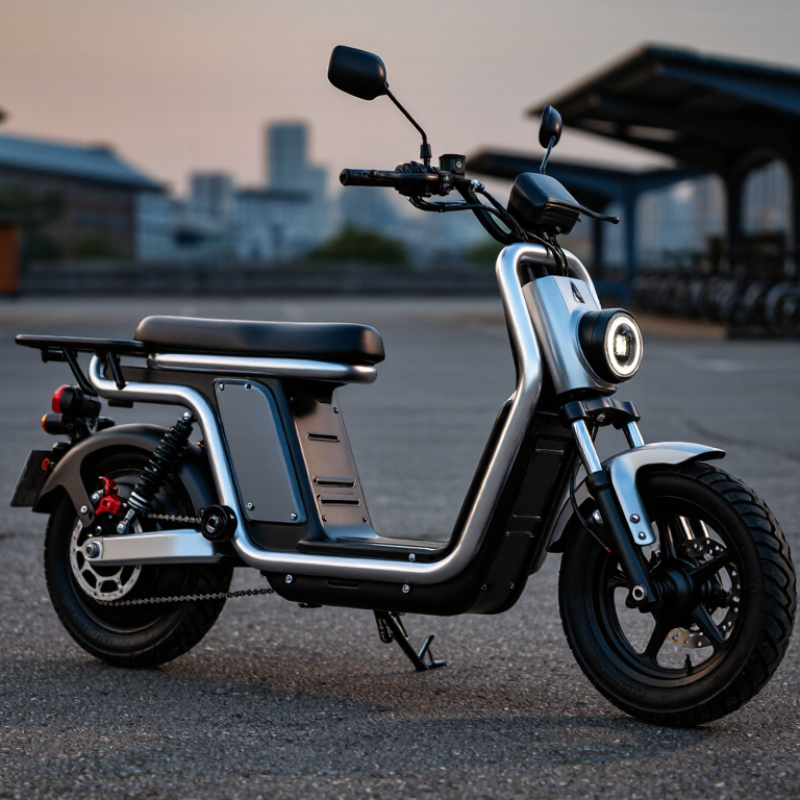
A 1500W electric moped uses an electric motor rated around 1500 watts. This rating describes the motor’s working output, not always its peak power. Some controllers briefly provide more power during starts or climbs. The battery usually supplies 48V or 60V, affecting acceleration, range, and hill performance. A larger battery may add weight, but it can make daily riding less stressful.
On level roads, a 1500W moped can offer confident acceleration and practical commuting performance. Results depend on rider weight, tire pressure, wind, temperature, and road slope. A stated range is only an estimate. Cold weather and repeated hill climbs can reduce it noticeably. That detail is easy to overlook. Before choosing one, check the battery’s watt-hours, charging time, and replacement availability.
Good equipment matters more than a large number on a specification sheet. Hydraulic or reliable mechanical brakes, bright lights, strong tires, mirrors, and stable suspension improve control. A sturdy frame also helps when carrying groceries.
Riders should inspect brake pads, fasteners, tire wear, and battery connections regularly. Charging should follow the manufacturer’s instructions, using a suitable charger in a dry, ventilated area. Local rules may limit speed, power, road access, or registration requirements. They should be checked before riding. The 1500W label is useful, but it does not describe the whole vehicle.
Choosing a China-Based 1500W Electric Moped Supplier
A China-based supplier offers direct access to mature electric mobility manufacturing. The International Energy Agency’s Global EV Outlook 2024 reports that over half of China’s new two-wheelers were electric in 2023. China also holds more than four-fifths of the global electric two-wheeler stock. This concentration creates practical advantages, including experienced assembly teams, established battery networks, and faster parts sourcing.
A reliable supplier should provide traceable battery cells, motor test records, and clear production timelines. Request documents covering UN 38.3 transport testing and applicable local road standards. Ask for sample units before placing a large order. Test braking distance, hill performance, charging temperature, and real-world range. A 1500W rating can sound impressive, but controller limits may reduce performance. That detail is easy to miss. The IEA also notes that battery cost and charging access strongly influence electric vehicle adoption. Therefore, compare warranty terms and replacement-battery availability, not only the purchase price.
Tips: Review three sample vehicles. Check serial-number consistency. Confirm spare-part delivery times. Visit the factory remotely or in person when possible. Request independent inspection before shipment. Some suppliers communicate well during negotiations, then respond slowly after payment. That risk deserves attention. A lower price may hide weaker cells, incomplete testing, or unclear after-sales support. Specification sheets are useful, but actual riding evidence matters more.
This chart compares common battery configurations for a 1500W electric moped. Battery energy is calculated as voltage × ampere-hours, while theoretical runtime is calculated as battery energy ÷ 1500W. Actual riding range and runtime vary with rider weight, speed, terrain, temperature, battery age, and controller efficiency.
A 1500W label is only a starting point when evaluating an electric moped supplier. Ask for the motor’s continuous rating, not only its peak output. Check the battery voltage, capacity, cell quality, and charging time. A 72V battery may deliver stronger climbing performance than a smaller system, but real results depend on rider weight, road slope, and temperature. Request tested range figures under clear conditions. Advertised distance can be optimistic.
Inspect the frame welds, suspension joints, tires, and cable routing closely. Hydraulic or reliable mechanical brakes should match the moped’s speed and total load.
Ask whether the controller includes overheat protection and whether replacement parts remain available. Confirm warranty terms in writing, including battery coverage.
Supplier experience matters too. Look for factory inspection records, safety testing documents, export experience, and responsive technical support. One detail is easy to miss: a polished showroom photo proves very little.
Tips: Request a sample or independent inspection before placing a large order. Test the moped on a hill with a realistic payload, then measure battery use after several trips. Compare the charger, display, lighting, and fasteners, not just the motor. I would also ask for the exact component brands and production dates. This may feel excessive. It prevents expensive surprises. A supplier that answers clearly is usually more dependable than one offering only the lowest price.
A 1500W electric moped can suit urban commuting, light delivery work, and short suburban trips. Its motor should provide steady acceleration rather than a sudden surge. Look for a removable lithium battery, hydraulic or mechanical disc brakes, LED lighting, and a strong steel or aluminum frame. A clear display should show speed, battery level, and fault warnings.
Real-world performance depends on rider weight, hills, temperature, and tire pressure. A supplier’s claimed range is only a controlled estimate. On a test route, record distance, speed, payload, and battery usage. Check whether the motor overheats after repeated climbs. It should not.
Ride quality also depends on suspension travel and saddle support. Small details matter.
Safety requires more than a powerful motor. Confirm that the battery includes overcharge, over-discharge, and short-circuit protection. Inspect cable routing for exposed wires or loose connectors. Test both brakes at low speed before entering traffic. Wear a certified helmet and use reflective clothing at night. Ask the supplier for battery test records, charger specifications, warranty terms, and spare-part availability. Factory photos are useful, but independent inspection is stronger evidence. I would not trust impressive figures alone. A sample unit may perform well, while later production varies. Verify several units, document defects, and question unclear answers before placing a large order.
Selecting a 1500W electric moped supplier starts with market fit, not a polished catalogue. In practical sourcing work, I check rider weight, road gradients, climate, and charging habits. The IEA Global EV Outlook 2024 reports that China dominates electric two- and three-wheeler sales. Export suppliers must still adapt products for local rules and riding conditions. A strong factory should provide clear motor ratings, battery specifications, production records, and realistic delivery schedules.
Battery quality deserves close attention. BloombergNEF’s 2024 Battery Price Survey places the average lithium-ion battery pack price at about 115 dollars per kilowatt-hour. This figure is a negotiation reference, not a moped quotation. Ask for cell traceability, battery management system data, cycle-test results, and applicable transport documents. Confirm certification requirements in your target market independently. A 1500W classification may change by jurisdiction. Small details matter.
After-sales capability often separates reliable suppliers from temporary traders. A factory video proves little. Request three to five samples for hill starts, braking, range, water exposure, and repeated charging. Record failures, not only successful rides. Review warranty response times, spare-part stock, and technician support. I would not select the lowest offer too quickly; hidden tooling, weak batteries, and delayed parts can erase the saving. Some evaluations remain imperfect. That is why a controlled pilot order is safer than a large first shipment.
| Selection Dimension | Recommended Benchmark for a 1500W Electric Moped | Why It Matters for Your Market | Evidence to Request from the Supplier | Priority |
|---|---|---|---|---|
| Rated Motor Power | A continuous rated output close to 1,500 W, with peak output clearly stated separately. | Rated and peak power are different. Local vehicle classification may depend on motor power, speed, and vehicle type. | Motor nameplate, technical datasheet, controller specifications, and an independent performance test report. | High |
| Battery System | A documented lithium-ion battery system, commonly specified as 48 V or 60 V, with capacity shown in Ah and Wh. | Battery voltage affects system compatibility, while watt-hours provide a more useful basis for comparing energy capacity. | Battery label, cell specification, battery-management-system details, charger rating, and UN 38.3 transport test documentation. | High |
| Estimated Riding Range | A range estimate based on a stated test method, rider load, speed, terrain, temperature, and battery capacity. | Real-world range can be substantially lower than an ideal laboratory or low-speed claim. | Test conditions, test route, rider load, average speed, temperature, and results from a loaded road test. | High |
| Maximum Speed | A clearly defined maximum speed with selectable limits where required by the destination market. | Speed limits and vehicle categories differ by country and may determine registration, licensing, insurance, and helmet requirements. | Speedometer calibration record, controller settings, road-test video, and destination-market compliance statement. | High |
| Regulatory Compliance | Documentation matched to the target country or region rather than generic declarations only. | A product accepted in one market may require different equipment, testing, or approval in another. | Applicable conformity documents, test reports, technical file, user manual, labels, and declarations required by the destination market. | High |
| Braking System | Hydraulic or mechanical disc brakes sized for the vehicle’s loaded weight and maximum speed, with an effective parking or cut-off function where applicable. | Higher power and heavier batteries increase stopping demands, especially on slopes or with cargo. | Brake component specifications, braking-distance test results, pad availability, and inspection records. | High |
| Frame and Load Capacity | A stated maximum gross vehicle weight, rider load, cargo load, and dimensional drawing. | Load capacity influences safety, delivery use, insurance, and suitability for local road conditions. | Frame material specification, fatigue or durability test results, weld inspection records, and load-rating label. | High |
| Weather and Electrical Protection | Clearly identified ingress-protection ratings for relevant electrical components, with charging restrictions stated. | Rain, humidity, dust, and improper charging can affect reliability and warranty claims. | IP test report for the applicable components, wiring diagram, connector details, and water-exposure instructions. | Medium |
| Quality-Control Process | Documented incoming-material inspection, assembly checks, electrical testing, road testing, and final inspection. | A repeatable process reduces batch-to-batch variation and early failure rates. | Quality manual, inspection checklist, sample inspection records, defect-rate data, and pre-shipment inspection procedure. | High |
| Production Capacity | Capacity figures that distinguish theoretical monthly output from confirmed production slots. | Reliable capacity helps prevent delivery delays during seasonal demand and promotional campaigns. | Production schedule, facility audit, equipment list, staffing information, and recent shipment records with confidential data removed. | Medium |
| Minimum Order Quantity | MOQ that fits the launch budget, with separate terms for standard units, custom colors, packaging, and private labeling. | A lower initial commitment can reduce inventory risk when testing a new market. | Formal quotation showing MOQ by configuration, tooling charges, sample policy, and reorder conditions. | Medium |
| Total Landed Cost | A complete cost model covering unit price, packaging, inland transport, freight, insurance, duties, taxes, and destination handling. | The lowest factory price may not produce the lowest delivered cost. | Commercial invoice example, packing list, carton dimensions, shipping quotation, tariff classification support, and payment terms. | High |
| Spare Parts Availability | Replacement parts for batteries, chargers, controllers, displays, brakes, tires, suspension, and lighting. | Fast access to common parts reduces downtime and improves dealer and customer satisfaction. | Parts catalog, price list, stock policy, lead times, compatibility chart, and recommended service kit. | High |
| Warranty and After-Sales Support | Written warranty terms that define coverage, exclusions, claim procedures, labor responsibility, and response times. | Clear support obligations reduce disputes and help forecast service costs. | Warranty document, claims workflow, technical-support contacts, troubleshooting guides, and historical claim-resolution data. | High |
| Sample and Pilot Testing | At least one production-equivalent sample tested under the intended market’s road, load, climate, and charging conditions. | Pilot testing can reveal handling, range, assembly, and service issues before a larger purchase. | Sample agreement, acceptance criteria, test checklist, corrective-action process, and approved sample record. | High |
| Supplier Communication | Consistent technical answers, transparent document sharing, and a defined escalation contact. | Clear communication reduces specification errors, shipment delays, and post-sale misunderstandings. | Response-time agreement, product change-notification process, meeting records, and written confirmation of specifications. | Medium |
| Recommended Evaluation Method | Use a weighted scorecard: compliance and safety 30%, product performance 25%, quality 20%, total landed cost 15%, and service 10%. | A weighted model prevents price from dominating decisions where safety, legal approval, and reliability are more important. | Compare at least three written quotations, verify documents independently, and record results from the same sample-test protocol. | High |
| Note: Motor-power limits, speed classifications, lighting requirements, registration rules, battery transport requirements, and product approvals vary by destination market. Confirm all requirements with the relevant local authorities before commercial importation. | ||||
China offers experienced assembly teams, established battery networks, and faster access to replacement parts. Production depth matters.
Request battery traceability, motor test records, production schedules, and transport safety testing documents. Confirm local road requirements too.
No. Ask for continuous motor power and controller limits. Peak output can sound impressive but perform differently on hills.
Test the moped with a realistic rider and payload. Record battery use across several trips, including slopes and cooler weather.
Check voltage, capacity, cell quality, charging time, and replacement availability. A larger battery is not automatically better.
Examine frame welds, suspension joints, tires, cable routing, brakes, fasteners, and lighting. Small faults can become expensive later.
Request a sample vehicle or independent inspection. Compare serial numbers, inspection records, warranty terms, and spare-part delivery times.
Use a realistic payload on a known slope. Measure climbing speed, motor heat, braking response, and battery loss.
Not really. A polished photo shows appearance, not cell quality, weld strength, or controller protection.
Be careful when replies slow after payment, documents remain vague, or prices seem unusually low. I may be overly cautious.
A 1500W electric moped is a practical two-wheel vehicle designed to combine efficient electric power with reliable urban mobility. Its motor capacity can provide responsive acceleration, useful hill-climbing ability, and a comfortable riding experience for commuting or short-distance delivery. When evaluating a Secutronic 1500w Electric Moped, buyers should consider battery capacity, estimated range, charging time, frame quality, braking performance, suspension, lighting, and overall ease of maintenance.
Choosing a China-based supplier may offer competitive pricing, flexible production options, and access to established electric vehicle manufacturing expertise. However, the best supplier should also demonstrate consistent quality control, clear technical specifications, dependable communication, stable spare-parts support, and secure packaging for transportation. Before placing an order, importers should assess product performance through samples, confirm customization capabilities, review warranty terms, and verify that the moped can satisfy the safety, certification, and road-use requirements of the intended market.
Lingmo
